
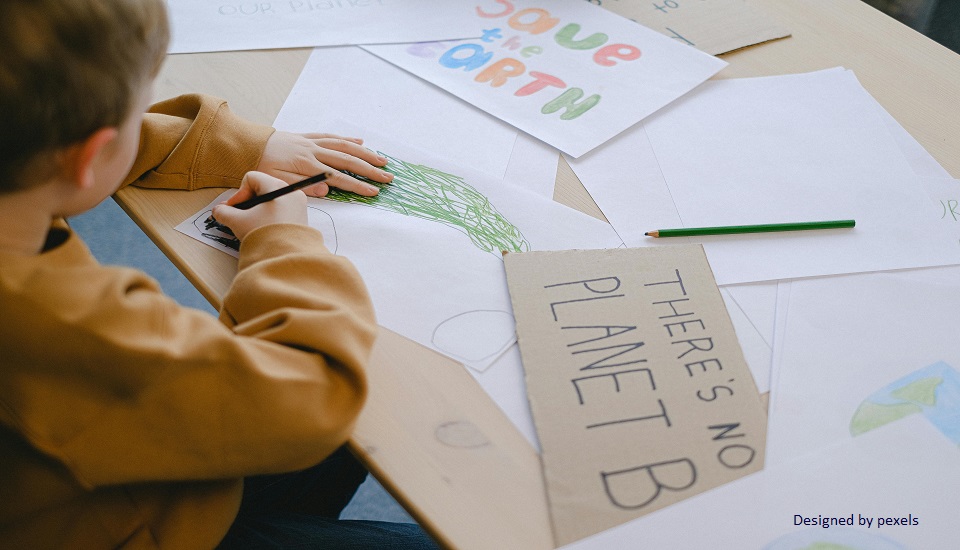
As climate change strengthens, it’s not just ecosystems that are under stress, children are too. Around the world, young learners are expressing growing anxiety, grief, and confusion about the planet’s future. A landmark 2023 Lancet study discovered that 59% of youth feel very or extremely worried about climate change, and over 45% say it affects their daily functioning. This growing phenomenon, often called eco-anxiety, is reshaping what it means to be an educator in the 21st century.
For teachers, the challenge goes beyond explaining the science of climate change, it’s about helping students circumnavigate their feelings about it.
That’s where climate emotional literacy comes in.
Understanding Climate Emotional Literacy
Climate emotional literacy is the aptitude to recognize, process, and respond to emotions related to environmental change. For students, this means developing resilience and agency instead of fear and paralysis. For teachers, it means fostering emotional safety while encouraging constructive action.
A 2024 UNESCO policy brief highlighted that climate education must “integrate cognitive, socio-emotional, and behavioral learning domains.” In simple terms: facts alone don’t drive action, feelings do. Teachers who understand this connection can turn anxiety into empowerment.
But here’s the problem, most pre-service teacher education programs still focus heavily on content knowledge and pedagogy, not on emotional literacy related to sustainability. As climate concerns become more crucial, this gap is becoming impossible to ignore.
How To Prepare Teachers for Emotional Conversations?
Future educators need organized preparation to handle emotional topics in the classroom. A 2023 OECD Education and Skills Report found that nearly 70% of teachers felt improvised to address students’ emotional responses to global crises, including climate change.
Teacher-education institutions can bridge this gap by:
- Embedding emotional literacy modules into curriculum studies, focusing on empathy, trauma-informed teaching, and classroom dialogue.
- Encouraging reflective practice, where student-teachers examine their own emotional responses to environmental issues.
- Creating collaborative learning spaces for discussing sustainability not just as a scientific topic but as a human story.
For example, Finland’s teacher-education programs now include courses on “Pedagogies of Hope,” where future teachers learn to simplify difficult conversations about the planet without creating despair. The approach blends environmental science with mindfulness, storytelling, and solution-oriented thinking.
The Role of Digital Tools and Experiential Learning
Technology can play a powerful role in preparing teachers for climate emotional literacy. Virtual reality (VR) simulations, for example, allow pre-service teachers to experience climate impacts, such as rising sea levels or deforestation, through immersive storytelling. This not only strengthens empathy but also encourages proactive teaching strategies.
A Stanford University study (2022) found that VR-based climate experiences increased participants’ willingness to engage in pro-environmental behavior by 27%. When teachers use these tools, they’re not just learning about the climate, they’re learning through it.
Field-based learning is equally vital. Universities can design practicum modules that partner with schools or NGOs engaged in sustainability projects. This real-world exposure helps pre-service teachers translate emotional understanding into community action.
Building Institutional Support Systems
Preparing emotionally literate teachers requires systemic support. Teacher-education institutions need to build cross-disciplinary networks, connecting educators, psychologists, and environmental experts, to design integrated programs.
Institutions that invest in mental well-being and reflective dialogue see significant benefits. According to Education International (2024), programs that include emotional intelligence training report a 30% development in teacher retention and stronger classroom climate resilience.
Leadership training is another critical piece. Future educators must not only manage classrooms but also influence school culture. Integrating courses on educational administration and emotional well-being can help teachers lead with compassion in climate-conscious schools.
Nurturing Hope and Agency
Eventually, the goal of climate emotional literacy isn’t to shield students from discomfort, it’s to guide them toward hopeful engagement. Research by Yale’s Program on Climate Communication (2023) shows that classrooms focusing on action-oriented climate projects see higher self-efficacy among students, meaning they believe their actions matter.
When pre-service teachers learn to balance realism with optimism, they empower young learners to think critically, act responsibly, and care deeply. This approach doesn’t just educate, it heals.
Conclusion
The educators of tomorrow will not only teach reading, math, or science, they’ll teach resilience, empathy, and global citizenship. As the climate crisis deepens, emotional literacy will become as essential as environmental literacy.
Teacher-education programs that assimilate climate emotional literacy into their frameworks will produce professionals capable of nurturing both intellect and heart. They’ll guide students not just to understand the planet’s challenges, but to face them with courage and compassion.
For aspiring educators and school leaders seeking to develop these competencies, advanced programs such as school administration courses in Mumbai or a certificate in educational administration and management can deliver the holistic skills needed to lead emotionally aware, sustainable learning settings.
Written By : Abhishek