
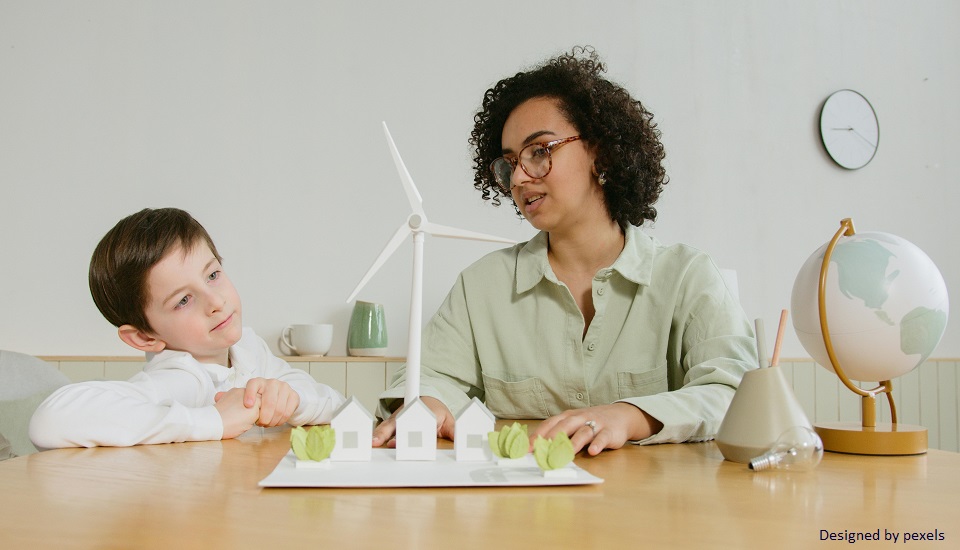
As young people are constantly exposed to distressing headlines about floods, wildfires, and rising temperatures, many experience a deep sense of uncertainty known as climate anxiety. It’s no longer enough for educators to simply deliver lessons on environmental science; they must also guide students through the fear and frustration that come with understanding these global realities.
This is where modern teacher training steps in. Through Advanced International Teaching Diploma Programs in Mumbai, future educators are being equipped with the knowledge and emotional intelligence to build resilience in their students—transforming anxiety into awareness, and fear into purposeful action. These programs go beyond conventional teaching methods, equipping educators to run classrooms where empathy, critical thinking, and climate awareness coexist.
Understanding the Challenge: What is Climate Anxiety
The discomfort and fear brought on by knowledge of climate change and its possible repercussions are referred to as "eco-anxiety" or "climate anxiety.”
Research shows that young people across the globe carry real concerns about the future of the planet: more than three-quarters of youth aged 16–25 report climate-related worries, and a majority say those concerns are negatively affecting their mental health.
One study of adolescents noted higher rates of anxiety and depression linked to climate-related uncertainty, emphasising the need for resilience and mental-health education in tandem with climate science.
Recognising climate anxiety does not mean pathologising normal responses—it means acknowledging that facing an uncertain climate future can generate grief, fear, and a sense of powerlessness. For teachers, this beckons a shift: beyond delivering facts about climate, they must build environments where students can process emotion, engage in action, and restore hope.
Why Teachers Must Be Equipped for Emotional & Resilience Work
Traditionally, teacher preparation emphasised pedagogy, subject knowledge, and classroom management. Teachers also need to be proficient in trauma-informed teaching, socio-emotional learning (SEL), and climate education integration in today's climate-affected society. Schools can become key sites of resilience-building, where students not only learn about climate risks but also develop agency over how to respond.
Within programmes such as International Teaching Diploma Courses for Professionals in Mumbai, teacher-candidates must learn these dimensions: how to create safe spaces, guide reflective dialogue, integrate climate content meaningfully, and scaffold action-oriented learning. This is a vital layer of modern educational leadership and classroom design.
Practical Strategies for Teaching Resilience in the Classroom
Here are actionable strategies that teacher-educators can consider:
1. Create Safe, Acknowledging Spaces
Begin by acknowledging climate concerns openly. Encourage pupils to express their emotions without passing judgment, such as fear, frustration, or grief. Establish classroom norms around respectful dialogue and allow peer-sharing or journaling of climate-related emotions.
Validating these feelings paves the way for deeper learning, rather than leaving students isolated.
2. Frame Climate Learning Around Solutions and Agency
Instead of focusing solely on issues, devote a substantial amount of teaching time to solutions, such as local adaptation, renewable technologies, and community resilience. According to research, students' anxiety levels drop and their sense of agency rises when they participate in solution-based climate science instruction.
Projects could involve modeling a community adaptation strategy, creating a school "green audit," and mapping local climate risks.
3. Integrate Socio-Emotional Learning (SEL) with Climate Education
Resilience involves emotional regulation, collaboration, meaning-making, and responsible action.
Embedding SEL into climate-curriculum might look like: guided reflection after a flood simulation; group discussion on ethical responses to climate injustice; partner-work designing a peer-led climate awareness campaign.
4. Connect to Real-World
Students are more empowered when climate concepts link to their own lived experience: how heat-waves affect their locality, how urban drainage might change flooding risk, or how their household energy choices matter.
Engagement is increased and abstract science is anchored into concrete action by this personal relevance. Facilitating community-based projects (e.g., tree-planting, waste-reduction drives) strengthens this connection.
5. Build Skill-Based Interdisciplinary Learning
Knowing facts is only one aspect of resilience; other skills include problem-solving, critical thinking, teamwork, and design-thinking. Teachers should craft interdisciplinary units where students use data (math), ethics (social studies), communication (language arts), and creative media (arts) to respond to climate issues.
These kinds of rich experiences help students feel capable, not helpless.
6. Monitor and Support Wellbeing
Keep an eye out for symptoms of climate-related discomfort, such as despondency, sleep disturbances, and continuous ruminating. Liaise with school counsellors or mental-health professionals as needed.
Establish mindfulness, discussion, and peer support routines in the classroom. Make sure that action tasks stay doable and upbeat rather than becoming overwhelming.
Role of Teacher Preparation & Leadership
For teacher preparation programmes, this means embedding modules on climate literacy, emotional resilience, trauma-sensitive pedagogy, and project-based learning frameworks.
Schools and educational leaders must also adopt policies and cultures that promote climate resilience: from infrastructure (shade, ventilation, green spaces) to curricula, to staff well-being. Teachers who complete advanced training are better positioned to lead change—not just in individual classrooms but across the school ecosystem.
Effective leadership in this area anticipates student emotional needs and designs curricula that respond to the climate-era reality rather than pretending the world is stable. This is where advanced credentials in educational leadership and climate-aware pedagogy become essential.
Towards a Future of Hope and Preparedness
International Teaching Diploma Courses for Professionals in Mumbai can give you the pedagogical and emotional-resilience training you need to confidently lead classrooms if you're looking to boost your career. By choosing such pathways, you not only refine your teaching practice but also become a change-maker who helps students thrive in a warming world.
Written By : Sanjana